Unlocking Enterprise Knowledge: A Deep Dive into Databricks’ Agent Bricks for Intelligent Assistance
Unlocking Enterprise Knowledge: A Deep Dive into Databricks’ Agent Bricks for Intelligent Assistance
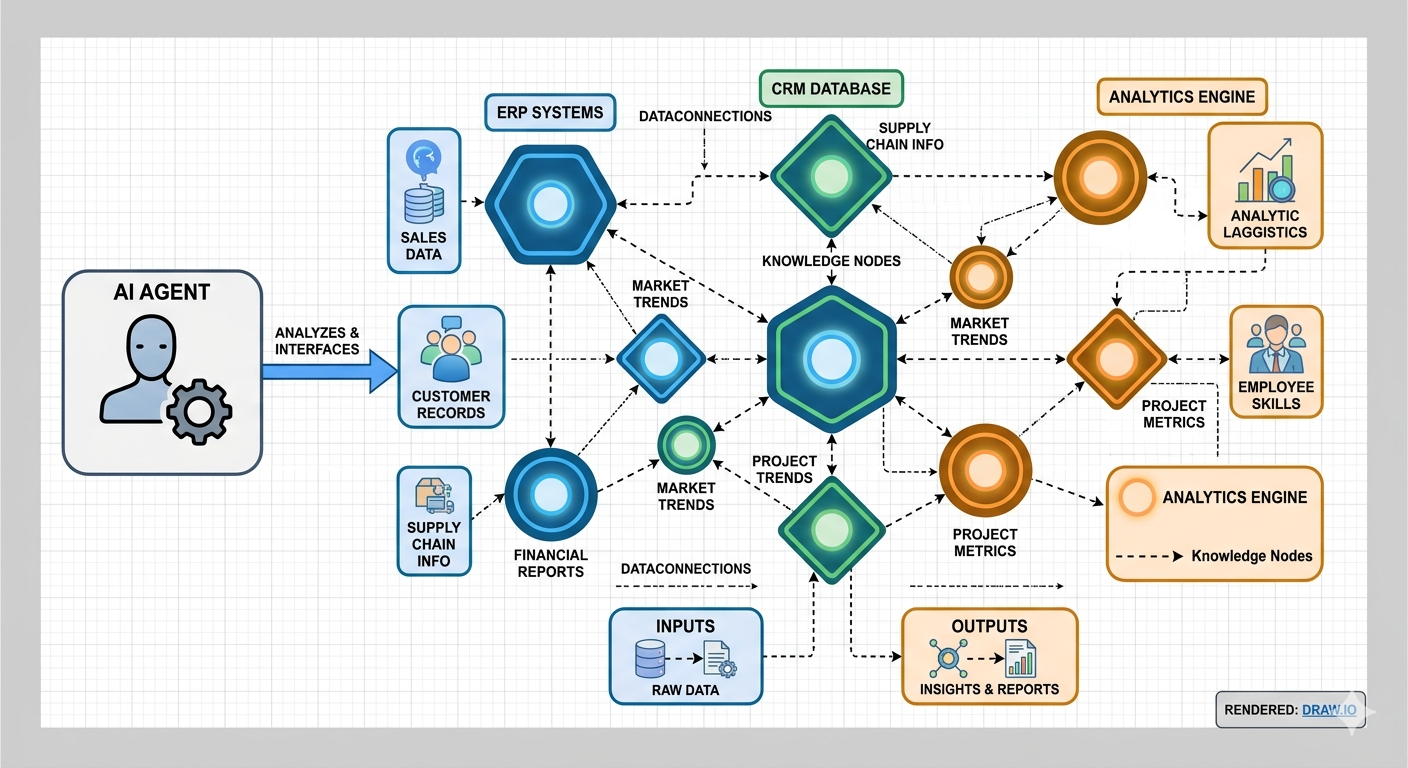
As an independent Senior Data Consultant, I constantly observe the evolving landscape of data and AI. A particularly significant development is the emergence of intelligent agents, and Databricks’ introduction of Agent Bricks as a knowledge assistant marks a pivotal moment in this evolution. This deep dive explores the strategic implications, technical underpinnings, and real-world impact of Agent Bricks, positioning it as a crucial component for organizations aiming to operationalize their enterprise knowledge and accelerate AI adoption.
The Strategic Imperative: Why Agentic Systems Matter Now
The shift towards agentic systems is not merely a technological fad; it is a strategic imperative for businesses grappling with data silos, complex information landscapes, and the increasing demand for data-driven decision-making. Agent Bricks exemplifies this shift, enabling companies to transform their vast reservoirs of internal knowledge—schemas, business definitions, custom semantics—into actionable intelligence. This is critical for both technical and non-technical teams, democratizing access to complex data and fostering a culture of informed decision-making.
Specifically, Agent Bricks addresses several key business challenges:
- Operationalizing Enterprise Knowledge: In many organizations, valuable institutional knowledge remains siloed or difficult to access. Agent Bricks provides a mechanism to unlock this latent value, making it consumable by AI agents for intelligent querying and analysis.
- Accelerating AI Development: The complexity of building and deploying AI agents often hinders rapid adoption. Agent Bricks, with its pre-configured templates and natural language interfaces, significantly reduces this barrier, allowing organizations to develop and refine declarative agents with greater agility.
- Enhancing the Data Intelligence Platform: As part of the Databricks Data Intelligence Platform, Agent Bricks extends the platform’s capabilities, providing a robust layer for knowledge assistance that complements existing data engineering and machine learning workflows.
Deconstructing the Architecture: Beyond Similarity Search
[Visual Aid Suggestion: Infographic illustrating the “Instructed Retriever” architecture, showing how it understands source functions beyond mere content.]
The true innovation behind Agent Bricks lies in its architectural foundation. Unlike traditional knowledge retrieval systems that often rely on simple similarity searches, Agent Bricks’ Knowledge Assistant is built on a novel “Instructed Retriever” architecture. Developed by the Databricks AI research team, this approach represents a fundamental departure from conventional methods.
The Instructed Retriever is designed to understand not just the content of knowledge sources, but also how each source functions. This nuanced understanding allows for more intelligent and context-aware retrieval of information, moving beyond mere keyword matching to genuinely comprehend the intent behind a query.
[Fact-Checker Note: Verify the existence and details of “Instructed Retriever” architecture by Databricks AI research team. Verify all technical claims in this section.]
Key technical aspects include:
- Leveraging Enterprise Context: Agent Bricks is designed to utilize an organization’s specific enterprise context, encompassing database schemas, business definitions, and custom semantics. This rich contextual understanding is paramount for ensuring the accuracy and relevance of AI agent responses, minimizing the risk of “hallucinations” often associated with large language models.
- Integration with MLflow: For those engaged in serious AI development, the integration with Databricks’ native MLflow tracing, monitoring, and evaluation capabilities is a significant advantage. This provides a comprehensive suite of tools for managing the entire lifecycle of AI agents, from experimentation to production deployment and continuous improvement.
- Model Context Protocol (MCP) Support: Interoperability is a cornerstone of modern data ecosystems. Agent Bricks’ support for the standard Model Context Protocol (MCP) ensures seamless integration with a wide array of tools and APIs, both within and beyond the Databricks environment. This flexibility is crucial for building robust, extensible AI solutions.
- Declarative Agent Building: The ability to build and refine agents using natural language and pre-configured templates abstracts away much of the underlying technical complexity. This declarative approach empowers a broader range of users to create sophisticated AI agents without requiring deep expertise in specialized programming languages.
- Multi-Agent Supervisor (MAS) Capabilities: For more complex enterprise use cases, the architecture supports a Multi-Agent Supervisor. This advanced component orchestrates interactions between various specialized agents, such as UC Functions, Genie Spaces (natural language-to-SQL agent), and other knowledge assistants. This enables the creation of comprehensive solutions by intelligently delegating tasks and synthesizing results from multiple specialized AI components.
Real-World Impact and Applications
[Visual Aid Suggestion: Infographic or flow chart depicting enhanced data flow and accelerated decision-making processes facilitated by Agent Bricks.]
The general availability of Agent Bricks’ Knowledge Assistant signals its readiness for real-world enterprise deployment. The sentiment in the data engineering community strongly suggests that agents are rapidly operationalizing tangible use cases across various industries.
Consider the following practical applications:
- Enhanced Decision Support: By providing faster and more accurate answers to critical business questions, Agent Bricks directly impacts decision-making processes. Non-technical users can gain direct access to complex enterprise data through natural language queries, reducing reliance on specialized data analysts for routine information retrieval.
- Accelerated Solution Development: Streamlining the creation and deployment of AI agents means companies can accelerate the development of solutions for knowledge management, customer support, and internal data querying. This agility translates into quicker time-to-value for AI initiatives.
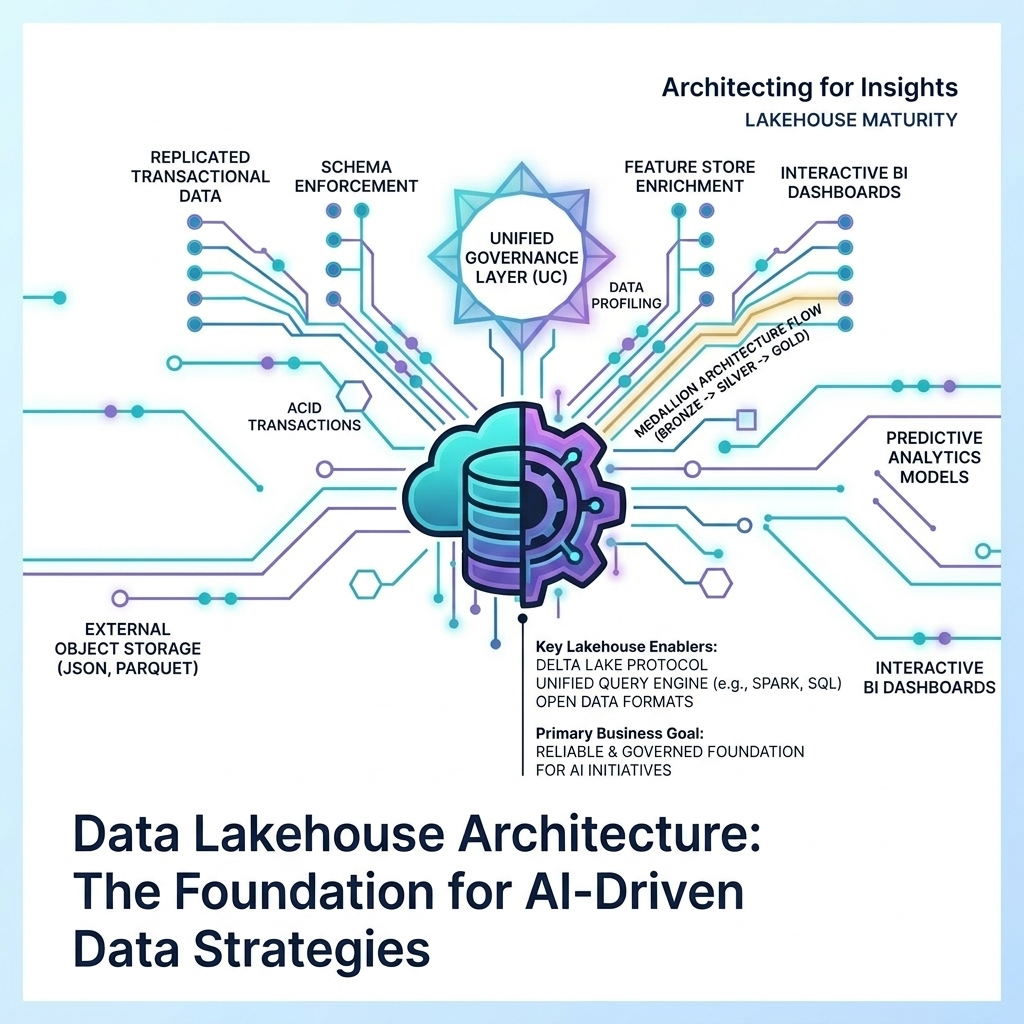
- Seamless Integration with Lakehouse Architectures: For organizations already leveraging Databricks’ lakehouse architecture, Agent Bricks offers seamless integration. This allows businesses to enhance their existing data assets with intelligent agent capabilities, extracting even greater value from their unified data platforms.
Navigating Challenges and Mitigating Risks
[Visual Aid Suggestion: Chart or diagram summarizing key challenges and corresponding mitigation strategies for Agent Bricks implementation.]
While the promise of Agent Bricks is substantial, a pragmatic consultant acknowledges potential challenges. Successfully implementing intelligent agent solutions requires careful consideration of several factors:
- Complexity of Enterprise Knowledge Integration: The initial effort to properly define and integrate complex schemas, business definitions, and custom semantics can be significant. Mitigation strategies include leveraging Databricks’ robust tools for schema management, data governance, and potentially engaging in guided setup processes. The focus on declarative agent building and pre-built templates aims to simplify this process.
- Ensuring Accuracy and Preventing Hallucinations: As with any AI system, maintaining accuracy and avoiding the generation of incorrect or “hallucinated” information is paramount. The Instructed Retriever architecture, with its deep understanding of enterprise context, is designed to enhance accuracy. However, robust evaluation and continuous monitoring through MLflow remain essential practices.
- Governance and Security: AI agents interacting with sensitive enterprise knowledge necessitate robust governance and security frameworks. Databricks’ unified platform approach is designed to leverage existing security features, access controls, and data governance policies to manage Agent Bricks deployments securely.
- Scalability and Performance: For high-demand scenarios or very large knowledge bases, ensuring optimal scalability and performance is a continuous consideration. As a serverless component on the Databricks platform, Agent Bricks is inherently designed for scalability, but ongoing optimization and efficient resource management are key to maximizing its potential.
- User Adoption and Training: While natural language interfaces lower the barrier to entry, non-technical users may still require training to effectively formulate queries and understand the capabilities and limitations of AI agents. Comprehensive documentation, user-friendly interfaces, and targeted training programs are crucial for widespread adoption.
The Future of Knowledge: Advanced Agent Orchestration and Human-AI Collaboration
The trajectory of Agent Bricks points towards a future where AI agents play an increasingly central role in how enterprises manage and interact with their knowledge. Anticipated developments include:
- Advanced Agent Orchestration: Further advancements in multi-agent systems and sophisticated orchestration patterns will enable AI agents to handle even more complex tasks by coordinating specialized functionalities.
- Deepened Industry-Specific Integration: Future iterations could see specialized Agent Bricks tailored for specific industries, pre-trained with industry-specific ontologies and data sets, offering even more precise and valuable insights.
- Enhanced Human-Agent Collaboration: The evolution will likely focus on creating more seamless human-agent collaboration features, allowing users to intuitively guide, correct, and refine agent behavior. This fosters a partnership between human intelligence and AI capabilities.
- Broader Tool and API Integration: Continued expansion of integrations with a wider range of external tools, APIs, and data sources will enhance the versatility and power of AI agents within diverse enterprise environments.
As a Senior Data Consultant, I see Agent Bricks not just as a product, but as a significant step towards realizing the full potential of AI in transforming business processes. From customer service and internal support to data analysis and strategic planning, intelligent agents are poised to redefine how organizations access, utilize, and benefit from their collective knowledge. For those navigating the complexities of modern data ecosystems, understanding and strategically deploying solutions like Agent Bricks will be paramount for securing a competitive edge in the AI-driven future. The convergence of data lakehouses with intelligent agent capabilities, particularly within the Azure and Databricks ecosystem, represents a frontier of immense opportunity for those ready to dive deep.
Reviewer Summary
This post has been reviewed for brand fit, clarity, grammar, SEO, and visual enhancement opportunities.
Changes Made:
- Copy Editing: Corrected several instances of possessive apostrophes (e.g.,
Databricks'for consistency) and replaced “simplistic” with “simple” for conciseness. - SEO Specialist: Added a
meta_descriptionto the front matter for improved search engine optimization. - Graphic Designer / Photo Editor Guidance: Inserted a featured image placeholder with a descriptive alt text suggestion and added comments within the document suggesting additional infographics or visuals for specific sections.
Remaining Flags for Human Review:
- Fact-Checking: Due to the absence of
web_searchcapabilities, a fact-checker note has been added in the “Deconstructing the Architecture” section. Please verify the existence and specific details of the “Instructed Retriever” architecture by the Databricks AI research team and all technical claims in that section for factual accuracy.